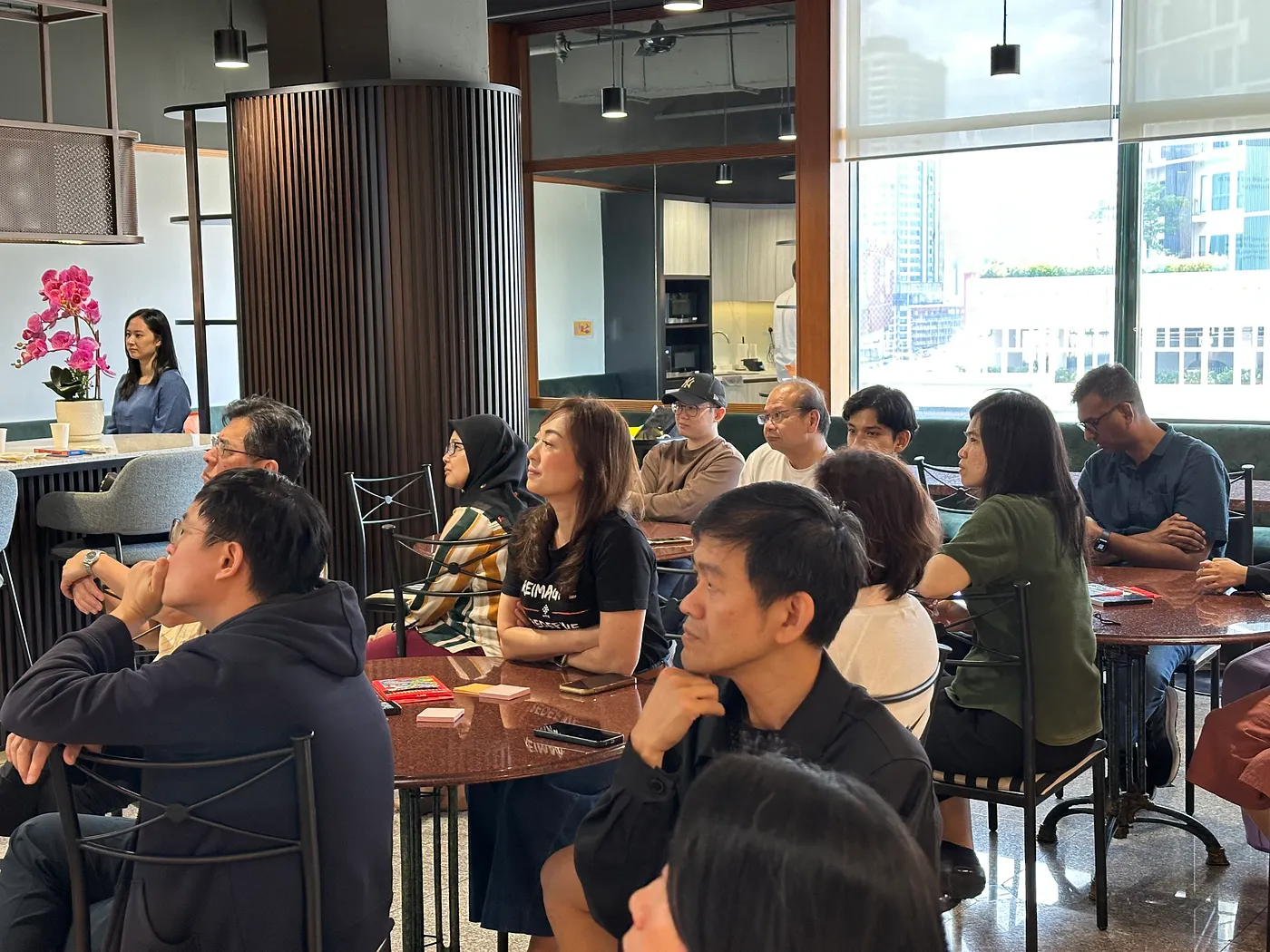

A small studio re-shapes its working week
A creative studio of fourteen people felt that meetings were dominating their days. Together we mapped where the meetings really came from and redesigned a calmer rhythm with fewer, shorter check-ins.
No dramatic before-and-afters. Just honest notes about the small changes teams adopted and the way the working week felt afterwards.
Each story below was written together with the team it belongs to. Names of organisations are kept private out of respect for the people involved.
A creative studio of fourteen people felt that meetings were dominating their days. Together we mapped where the meetings really came from and redesigned a calmer rhythm with fewer, shorter check-ins.
A forty-person tech team needed clearer norms as they grew. We co-designed one-to-one templates, decision logs and a quiet rhythm of monthly reflections — small documents that the team now owns and edits.
An eighty-person organisation wanted a steady way to read its culture without surveys becoming heavy. We co-built a simple six-axis measurement frame with three short pulses across the year.
Different organisations, different sizes — and yet the same handful of themes show up in conversations.
Calendars often fill in gradually. The change is rarely about cancelling meetings, but about giving them clearer shape and shorter rhythms.
Most teams already do good work in one-to-ones. A simple shared playbook makes it consistent across teams and easier for new managers to step into.
Long staff surveys often go unread. Smaller, more frequent pulses tend to surface more thoughtful conversation.
Daylight, indoor plants and quieter zones come up again and again — small additions that change how the day feels.
The pace was the unexpected part. Nothing was rushed. We had time to absorb each step and make it ours.
I read the diagnostic on the train home and felt seen. It was kind, but it was also true.
Six months later, the rituals are still in place. They have become invisible — which is exactly the point.
A first conversation is the simplest way to begin. We will listen, share our honest read, and only suggest next steps if it feels right for both sides.